Craft is a constant changing term used to describe hand made objects, craft is the process of making something, a handmade product/object that requires skill and unfortunately craft is often referred to as a 'hobby' whereas there's a market for products of this nature where sites such as; https://www.etsy.com/uk/, http://folksy.com/ thrive off this consumer as well as galleries selling work from designers and artists.
"What is Craft?
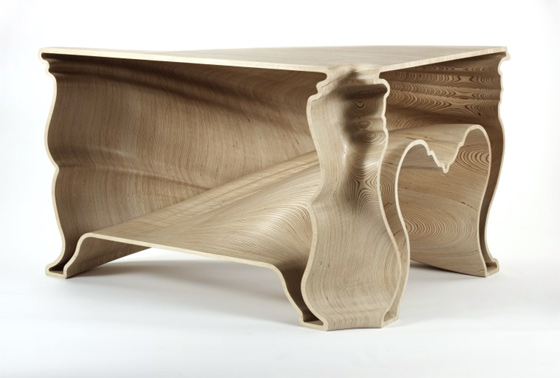
To celebrate a partnership between the V&A and the Crafts Council, we asked leading figures in the craft world to tell us what the term craft means to them.
Mark Jones
Director, Victoria & Albert Museum (2001 - 2011)
Craft is remembering that art is seen, felt and heard as well as understood, knowing that not all ideas start with words, thinking with hands as well as head.
Rosy Greenlees
Director, Crafts Council
'Contemporary craft is about making things. It is an intellectual and physical activity where the maker explores the infinite possibilities of materials and processes to produce unique objects. To see craft is to enter a world of wonderful things which can be challenging, beautiful, sometimes useful, tactile, extraordinary; and to understand and enjoy the energy and care which has gone into their making.'
Laurie Britton-Newell
Curator, ‘Out of the ordinary’ exhibition, V&A, November 2007
'I use the word craft as an umbrella term, not as the definition of a separate discipline. I find craft difficult when it has an ‘s’ on the end; the crafts implies something clear cut, but it isn’t. When craft is involved with the making of something, be it a pot or a piece of writing, it usually means that the process of how and why it has been put together has been well considered, and generally I prefer it. Instead of using "that’s cool" people could start saying "that’s craft"!'
Caroline Broadhead
Practitioner
'What craft means to me is the making part, the how you make, and this is an exchange with materials - what you give to a material, and what it gives back. This exchange can be awkward, it can be a struggle, or one party can dominate, but if it is a productive exchange, then that's when it's worth looking at. But ultimately, it is the extra something that makes it special.'
Christopher Frayling
Rector, Royal College of Art
'If you look up the word 'craft' in dictionaries of phrase and fable, the entry will say "see freemasonry". That's craft as secret knowledge, locked away in some secret place known only to master-craftspeople. Although there's a strong element of tacit knowledge - as distinct from formal knowledge - in all craft activity, this is in fact far from a secret form of knowledge, just a very difficult one to pin down. Making close contact with materials, technical skills plus imagination, tangible results in the form of things, sometimes pushing at the outer limits of function, taking the material for a walk. The American Customs & Excise definition of 'a work of art' is that the owner must be able to prove it is completely useless. Craft work is something else, though it can produce objects for contemplation as well as objects for use.'
Paul Greenhalgh
Director, Corcoran Museum, Washington DC, and editor of ‘The Persistence of Craft’
'Craft has changed its meaning fundamentally at least three times in the last two centuries, and it means fundamentally different things from nation to nation even in the Western world. So there can be no one-liner that identifies larger single meanings, as it doesn't have one. If it is of use in the current context, it is to recognize the significance of genre-based practice in the arts. It should also be a useful category in a global cultural environment. It might even have meaning as a signifier of a socio-political outlook. But it should have nothing to do with aesthetics, and less to do with negative approaches to technology.'
David Revere McFadden
Chief curator and vice president, Museum of Arts & Design, New York
'Craft, art, and design are words heavily laden with cultural baggage. For me, they all connote the profound engagement with materials and process that is central to creativity. Through this engagement form, function, and meaning are made tangible. It is time to move beyond the limitations of terminologies that fragment and separate our appreciation of creative actions, and consider the "behaviors of making" that practitioners share.'
Professor Simon Olding
Director, Crafts Study Centre, Farnham, Surrey
'An expression of human endeavour creatively realised on the borders of utility, design, architecture, sculpture and art. Craft is specific, recognizable and broad enough to carry loaded meaning with good cheer. It means little without its association to the individual maker and the organisations that give it life and value.'
Caroline Roux
Acting editor, Crafts magazine
'Craft has never been more important than now, as an antidote to mass production and as a practice in which the very time is takes to produce an object becomes part of its value in a world that often moves too fast.' "
I agree with this quote by Caroline Roux as mass production increases we lose character to objects and pieces and paying for low quality products that are mass produced with no sentiment or uniqueness. 'Craft' or hand made products are time consuming and creatively designed giving the object character and you're buying someone's speciality skills. Although not everyone can pay for these true craft the market is still large and they're seen as a luxury items that may hold sentiment especially if the object is commisioned work. A lot of people take it upon themselves to create their own objects reading books, magazines and watching youtube videos but there's a huge difference between hand making something for an activity to save money or as a hobby compared to dedicating yourself to career in this field and studying an education in a Craft subject or like myself Applied Arts.
http://www.vam.ac.uk/content/articles/w/what-is-craft/
Thursday 2nd October, 2014.
In our Brief reading for this module we were assigned to choose a quote from the world of Design, I have selected:
"I think skills are currently really underappreciated in design. Skills are too often thought of as a way of implementing design, whereas I have found the learning of skills to be one of the most important ways of actually changing my way of thinking about things." Darrell Bishop.
I find this quote very true especially in my discipline where knowledge of materials and their properties helps me design an object as properties differ from various materials and processes.
The craft seminar works perfectly alongside this quote because 'craft' books allow people to have access to a step-by-step guide into making something but without the knowledge of solving problems it's very difficult to develop something further or fix something.

No comments:
Post a Comment